HIIT alternates short, all-out bursts with rest, making it one of the most time-efficient ways to lose fat. It burns calories during and after training, trims abdominal fat better than steady cardio, and improves insulin sensitivity. Aim for 2 to 3 sessions weekly, pair it with balanced eating, and use the no-equipment 12-minute routine below to start.
You may have heard about it before, whether it was on the news, online, or even from a friend or social media. High-intensity interval training for weight loss (or HIIT) has gained recognition as a relatively fast and effective way to promote body fat loss. It pairs naturally with a structured physician-guided weight loss program when you want results that actually last. So what exactly is HIIT, and why does it work so well?
What is HIIT and how does it work?
HIIT is an exercise protocol that alternates brief periods of all-out intensity with periods of low-intensity exercise or rest. This pattern has been found to be one of the most efficient ways to reduce fat in people who are carrying extra weight. The hard work periods can range from 5 seconds to 8 minutes and should be done at 80 to 95 percent of your maximum heart rate, while the rest and recovery periods range from as little as 5 seconds up to 8 minutes at 40 to 50 percent of your maximum heart rate. Your maximum heart rate is a number used in the fitness world to help prevent over or under working out, and you can estimate it by subtracting your age from 220. Alternate these work and rest periods for 20 to 60 minutes, and adjust them for any fitness level.
Why is HIIT so beneficial?
HIIT can help lower blood pressure and cholesterol while improving insulin sensitivity, which together support better cardiovascular function. This style of training reduces body weight and abdominal fat while helping you hold on to muscle mass. Your ability to burn fat during and after exercise goes up, and research suggests interval training can burn more calories in less time than steady-state exercise, a benefit linked to elevated calorie burn after your workout ends, sometimes called the afterburn or excess post-exercise oxygen consumption (an evidence review of interval training benefits). All of this happens while your metabolism stays elevated long after you finish.
Does HIIT really burn more fat than steady-state cardio?
Yes. Research indicates that HIIT is more effective at reducing subcutaneous fat and abdominal fat than traditional steady-state aerobic exercise, which keeps your heart rate fairly constant throughout the session. A study comparing HIIT and steady-state aerobic exercise over a 24-week period found that participants in the HIIT group lost significantly more subcutaneous fat than those in the steady-state group (Tremblay et al.). Another study found that 15 weeks of HIIT significantly reduced abdominal fat in previously untrained individuals. One particularly interesting study performed on overweight people with Type 2 diabetes indicated that HIIT allowed for the greatest amount of fat loss, further showing how powerful this approach can be. A broad review of interval training and fat metabolism reaches a similar conclusion, noting that high-intensity work tends to drive more meaningful fat loss than steady-state exercise (a peer-reviewed analysis of HIIT and fat loss).
If steady cardio has stalled for you, that visceral, hard-to-shift belly fat is often tied to deeper metabolic issues, and HIIT is one tool that can help. People dealing with stubborn weight tied to blood sugar problems may also benefit from addressing insulin resistance directly, since improving insulin sensitivity makes fat loss far easier to sustain.
How does HIIT affect blood sugar?
HIIT can meaningfully improve how your body handles blood sugar. Short, intense efforts increase insulin sensitivity, meaning your cells respond better to insulin and pull glucose out of the bloodstream more efficiently. National guidance highlights regular physical activity as a core way to manage blood sugar and lower the risk of metabolic disease, and interval training is a time-efficient way to hit those activity targets (federal physical activity guidance for adults). For many people, better blood sugar control is the missing link between exercising and finally seeing the scale move.
How often should you do HIIT to lose weight?
For most people, 2 to 3 HIIT sessions per week is the sweet spot. That schedule gives your body enough time to recover between hard efforts while keeping your metabolism elevated. Because HIIT is demanding, more is not always better, and adequate rest helps prevent burnout and injury. Major health organizations recommend that adults get at least 150 minutes of moderate activity or 75 minutes of vigorous activity each week, and a few well-placed HIIT sessions can cover the vigorous portion efficiently (the American Heart Association activity recommendations). Pair those sessions with strength work and walking for the best overall results.
A simple 12-minute HIIT workout to try
Are you wondering how to get started? Give this 12-minute HIIT workout a try. Remember that exercise works best alongside a sustainable, balanced diet, since weight loss still relies on a steady calorie deficit (a medical overview of HIIT and weight loss).
You will do 3 rounds of 4 moves. Do as many reps as you can in 30 seconds starting with the first move, rest for 30 seconds, then move on to the next move.
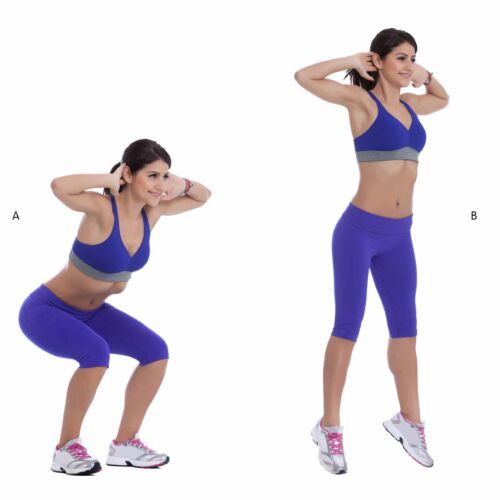
Air (bodyweight) squats, or squat jumps (depending on fitness level), 30 seconds
Rest 30 seconds
Push ups, 30 seconds
Rest 30 seconds
Plank, 30 seconds
Rest 30 seconds
Burpees, 30 seconds
Rest 30 seconds, repeat 2x
Air Squats
For air squats, stand with feet shoulder-width apart and arms bent with hands at chest level. Push your butt back, as if sitting down in a chair, and slowly lower yourself down until your hip crease is below your knees, making sure to keep your knees behind your toes. Stand back up and repeat.
Squat Jumps
For squat jumps, stand with feet shoulder-width apart, arms bent in front of you with hands at chest level. Bend your knees and lower yourself into a full squat. Once you hit the bottom, jump up explosively and reach high toward the ceiling. When you land, return down to the squat position and repeat.
Push-ups
Everybody knows how to do these, but in case you have gotten amnesia: Start in plank position, feet and hands on the floor with your body straight. Lower yourself down until your chest hits the floor and raise yourself back up, keeping your core tight. If these are too hard, you can scale them and drop to your knees, just make sure to keep your abs engaged the entire time.
Planks
Facing the floor, get onto your hands and toes, keeping your arms straight, abs engaged, and creating a straight line from toes to shoulders. If this is too hard, you can lower yourself down to your elbows and forearms.
Burpees
From a standing position, quickly drop your body to the floor by kicking your feet behind you and touching your chest to the ground. As fast as possible, bring your feet back under you and finish the movement by jumping into the air and clapping your hands overhead.
When HIIT alone is not enough
HIIT is a powerful tool, but it is only one piece of the puzzle. Hormones, metabolism, sleep, and blood sugar all shape how easily your body lets go of fat, and exercise cannot always overcome those barriers on its own. When effort in the gym is not matching results on the scale, a clinical evaluation can uncover what is holding you back. Our weight loss services combine medical oversight, nutrition, and metabolic support so your hard work in each HIIT session actually translates into lasting change.
Frequently Asked Questions
Is HIIT a good way to lose weight?
Yes, HIIT is one of the most efficient forms of exercise for fat loss. It burns calories during the session and keeps your metabolism elevated afterward, and studies show it reduces abdominal and subcutaneous fat more effectively than steady-state cardio for many people. Pairing it with a balanced diet maximizes results.
How quickly will I see results from HIIT?
Most people start noticing improvements in stamina and energy within a few weeks. Visible changes in body composition usually take several weeks to a few months, depending on your starting point, diet, sleep, and consistency. Fat loss is gradual, so steady habits matter far more than any single intense workout.
Can beginners do HIIT?
Absolutely. HIIT is highly adjustable, so beginners can start with shorter work periods, longer rest, and low-impact moves like bodyweight squats or modified push-ups. Begin with one or two short sessions per week, focus on good form over speed, and check with a health professional first if you have any medical concerns.
What are the downsides of HIIT?
Because HIIT is so demanding, doing it too often can lead to fatigue, poor recovery, or injury, especially with sloppy form. It may not be appropriate for everyone, including some people with heart conditions or joint problems. Limiting sessions to 2 or 3 per week and allowing rest days helps you stay safe and consistent.
Does HIIT help with belly fat specifically?
HIIT can help reduce abdominal and visceral fat, the deeper fat linked to metabolic problems. You cannot spot-reduce fat from one area, but the overall fat loss and improved insulin sensitivity that HIIT promotes tend to shrink the waistline over time, particularly when combined with sound nutrition and adequate sleep.
Ready to take the next step?
Talk with the AgeRejuvenation team about a Medical Weight Loss plan built around your labs and goals.