Shockwave therapy uses focused acoustic waves to restart healing in stubborn tendon and joint injuries. Through mechanotransduction it boosts blood flow, builds new collagen, and calms pain pathways, regenerating tissue rather than just masking symptoms. Common uses include plantar fasciitis, Achilles and patellar tendinopathy, tennis elbow, and rotator cuff pain, with relief building over several short, non-invasive sessions.
If you have stubborn heel pain, tendon issues that keep coming back, or aching joints that slow you down, it is easy to feel stuck. Many treatments only take the edge off for a while. At AgeRejuvenation, we focus on therapies that help your body repair itself, not just hide symptoms.
Shockwave therapy is one of those options. This non-invasive treatment uses powerful acoustic waves to stimulate healing in damaged tissue. When you understand the mechanism of action of shockwave, it becomes clear why it can be so helpful for chronic pain and slow-to-heal injuries.
What Is Shockwave Therapy?
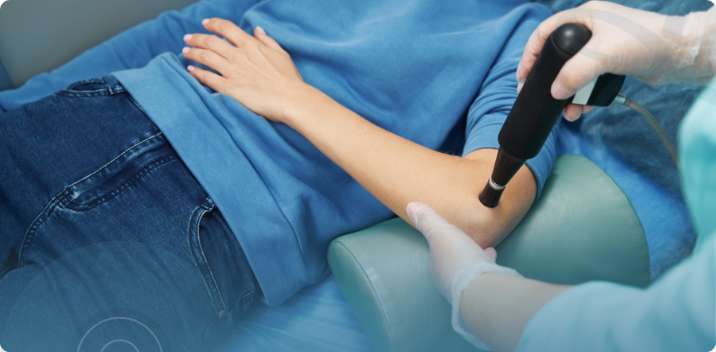
Shockwave therapy, also called extracorporeal shockwave therapy (ESWT), uses a handheld device to send high-energy sound waves into a specific area of your body. Despite the name, it is not an electrical shock. These are focused pressure waves that travel through the skin into tendons, ligaments, muscles, and sometimes bone, and they are most commonly used for chronic musculoskeletal pain and stubborn tendon problems.
During a session, a provider applies a gel to your skin and moves the device over the painful area. Short bursts of shockwaves are delivered in a controlled pattern. Treatment usually takes only a few minutes, and there are no incisions, injections, or anesthesia. Most people describe the sensation as tapping or a deep vibration that is very manageable.
At our clinics, our acoustic wave treatment for chronic pain and slow-healing injuries fits naturally with other regenerative services such as stem cell therapy, PRP therapy, and peptide therapy for pain relief. The goal is to restart healing in tissue that has been irritated or overloaded for a long time, so you can move more comfortably again.
How Does Shockwave Therapy Regenerate Tissue?
Shockwave therapy regenerates tissue through a process called mechanotransduction, where acoustic waves are converted into cellular signals. These signals boost blood flow, spark collagen production, and form new blood vessels, which together restart a stalled repair process in injured tendons and ligaments.
The mechanism of action of shockwave may sound complex, but it can be broken down into changes that happen at the cellular and nerve level. According to research on the biologic effects of focused and radial shockwave at Mayo Clinic, these acoustic waves can trigger cell proliferation, new blood vessel growth, and changes in pain pathways. These changes are what help tissue repair and pain calm down over time.
Cellular Changes That Restart Healing
When shockwaves enter the tissue, they create small mechanical forces that cells can sense. In areas with chronic injury, healing often stalls. The tissue may be stuck in a low-grade inflammatory state, with poor circulation and stiff, disorganized fibers.
Shockwave therapy helps by:
Increasing blood flow to the area so more oxygen and nutrients reach damaged tissue.
Encouraging the production of new collagen, the main building block in tendons and ligaments.
Supporting the breakdown of disorganized scar tissue and small calcium deposits.
These signals tell your body to treat the area as a fresh injury and start a more efficient repair process. Clinical reviews note that shockwaves can jump-start the body's ability to regenerate new tissue, especially in injuries that have not responded to rest or physical therapy. Over time, the tissue structure becomes stronger and more flexible instead of thick, tight, and painful.
How Shockwave Therapy Reduces Pain
Pain relief is not just about healing tissue. It also depends on how your nervous system processes signals from that area. Shockwave therapy can influence this in several ways.
The treatment can reduce the activity of nerve fibers that constantly send pain messages to the brain. Researchers describe how shockwaves can overwhelm local pain receptors and reduce the chemical messengers that carry pain signals, which is one reason many patients feel a numbing effect right after a session. It may also lower local inflammation around the nerves and change how pain is filtered at the spinal cord level. Many patients notice that the treated area feels less sensitive and easier to move after a few sessions.
Because tissue repair and pain modulation happen together, results tend to be longer lasting than those from medications that only numb discomfort for a few hours.
Common Orthopedic Shockwave Uses for Chronic Pain
In practice, the most common orthopedic shockwave uses involve long-lasting tendon and joint problems. These are the issues that often do not respond well to rest alone or keep coming back once activity resumes.
At AgeRejuvenation, typical orthopedic shockwave uses include:
Plantar fasciitis and chronic heel pain.
Achilles tendinopathy in active adults and runners.
Tennis elbow and other overuse tendon injuries in the arm.
Patellar tendinopathy (jumper's knee) in the front of the knee.
Rotator cuff tendinopathy and shoulder pain.
These uses line up with what major medical centers report, where shockwave therapy is applied to foot, knee, elbow, and shoulder tendon injuries that limit movement. Our broader menu of regenerative medicine options for joints, tendons, and recovery means we can match the right approach to your specific problem.
Shockwave therapy can also support patients with early joint degeneration who are hoping to delay more invasive options. While it does not cure arthritis, it can improve mobility and reduce discomfort enough to help you stay active with less pain.
For many people, this treatment becomes the turning point that allows them to get back to walking, exercising, or working without constant reminders from a painful joint or tendon.
How Many Shockwave Therapy Sessions Do You Need?
Most shockwave protocols involve a short series of sessions rather than a single visit. A common plan is several appointments spaced about a week apart, with meaningful pain relief building gradually as the tissue repairs over the following weeks.
Your experience with shockwave therapy starts with a detailed evaluation. We look at your medical history, activity level, and previous treatments, then examine how you move and where you feel the most pain. This helps us confirm whether shockwave therapy is a good match for your specific condition.
A typical tissue-regenerating shockwave plan at AgeRejuvenation includes a series of short sessions, often once a week for several weeks. During each visit you will relax on the treatment table while a member of our team applies the device to the target area. The intensity is adjusted to your comfort level, and you can speak up at any time if you need a change.
Afterward, you might feel mild soreness or warmth in the area for a day or two. Most people go right back to normal daily activities, although we may suggest that you limit high-impact exercise briefly to give the tissue time to respond.
Because we are a regenerative and longevity-focused clinic, we often pair shockwave therapy with other services, such as medical weight management to reduce joint load or hormone treatments when imbalances are contributing to poor recovery. This integrated approach is designed to support your long-term results, not just a short period of relief.
Is Shockwave Therapy Painful?
Shockwave therapy is usually described as tolerable rather than painful. You will feel rapid tapping or pulsing against the skin, and treating the most tender spots can be briefly uncomfortable. The intensity can be adjusted, and most people tolerate the full session without anesthesia.
For many patients, understanding the mechanism of action of shockwave is the first step toward seeing pain relief as something more than taking a pill or living with it. Shockwave therapy stimulates real changes in blood flow, tissue structure, and nerve signaling, which is why it can provide lasting improvement for stubborn orthopedic problems. It is also a noninvasive alternative to injections and surgery for many active patients.
At AgeRejuvenation, our team has seen people return to work, sports, and day-to-day life with less pain and more confidence after completing a personalized shockwave plan. If chronic tendon or joint pain is holding you back, you can find out whether this regenerative therapy fits your goals and overall health plan.
Frequently Asked Questions
Does shockwave therapy actually work for chronic pain?
For many people, yes. Shockwave therapy targets the most common orthopedic shockwave uses, like plantar fasciitis, Achilles tendinopathy, and tennis elbow, that often fail to respond to rest alone. By restarting the healing process and calming pain pathways, it can produce relief that lasts longer than medication, though results vary by person and condition.
How does shockwave therapy regenerate tissue?
It works through mechanotransduction, where acoustic waves are sensed by cells and converted into healing signals. This boosts blood flow, encourages new collagen and blood vessel formation, and helps break down disorganized scar tissue. The result is a more organized, stronger repair in tendons and ligaments that had been stuck in a stalled healing state.
How long does it take to feel relief from shockwave therapy?
Some people notice a temporary numbing or reduced pain right after a session because the treatment overwhelms local pain receptors. The deeper, more durable improvement in pain and function usually develops over the following weeks as tissue remodels. A typical plan spaces sessions about a week apart over several weeks.
Are there side effects of shockwave therapy?
Side effects are usually mild and short-lived. Common ones include temporary soreness, redness, mild swelling, or warmth at the treated area, often fading within a day or two. Shockwave therapy is not recommended in certain situations, such as pregnancy or a bleeding disorder in the treatment area, which is why a thorough evaluation comes first.
Is shockwave therapy the same as the electrical shock?
No. Despite the name, shockwave therapy uses focused acoustic pressure waves, not electricity. A handheld device sends sound waves through the skin into the targeted tissue. Most patients describe the feeling as rapid tapping or a deep vibration rather than an electric shock, and the intensity can be adjusted to your comfort.
Ready to take the next step?
Talk with the AgeRejuvenation team about a Shockwave Therapy plan built around your labs and goals.